



You’ve built something great.
A product, service, or mission that deserves attention. You’ve poured your heart, time, and resources into creating something valuable. But there’s a silent killer destroying your chances of success: the belief that “good work speaks for itself.”
It doesn’t.
Marketing isn’t a luxury or an afterthought. It’s the engine that determines whether your business thrives or fades into obscurity. By investing in marketing expertise—whether by training your team or hiring specialists—you’ll stop sabotaging your own success and finally connect with the audience waiting for you.
Let’s break down why ignoring marketing is the most dangerous decision you can make—and what to do about it.
Marketing Isn’t a “Nice-to-Have”—It’s the Core Engine of Your Business
Marketing makes everything else possible.
Without it, even the best products, services, and missions remain invisible. Your competition isn’t necessarily better than you. They’re just better at being seen. And in business, being seen is half the battle.
Think about it. You can have the most innovative solution, the highest quality product, or the most transformative service in your industry. But if no one knows it exists, does it matter?
Marketing is the bridge between what you’ve built and the people who need it. It’s not a department you bolt on later. It’s not an add-on after you’ve “made it.” It’s the foundation that every successful business is built on from day one.
Sales depends on marketing to fill the pipeline. Product development depends on marketing to understand customer needs. Operations depends on marketing to know how many orders to prepare for. Your entire business ecosystem runs on the fuel that marketing provides.
If no one knows you exist, it doesn’t matter how exceptional your work is. You’ll stay stuck, frustrated, and wondering why growth feels impossible.
The Myth That’s Killing Your Growth: “If It’s Good, People Will Find It”
Here’s the reality check: saying your offer once (or even a few times) doesn’t mean your dream customer will see it.
The attention economy is crowded. Brutally crowded. Your potential customers are bombarded with thousands of messages every single day. Consistency and repetition aren’t optional—they’re non-negotiable.
Your audience needs to hear your message multiple times before they even recognize you exist. Studies show it takes 7-20 touchpoints before someone takes action. Even if you post three times per day on every platform, that doesn’t mean one person will see all of your content. Algorithms filter. People scroll. Life gets busy.
Posting regularly just means you’ve widened the opportunity for your dream customer to find you and learn about you. Each piece of content is another chance for someone to discover you for the first time.
And here’s the thing most business owners get wrong: waiting for organic discovery is a gamble that rarely pays off. The “if you build it, they will come” mentality died in the 90s. Today, you need to show up where your audience already is and tell them repeatedly what you do and why it matters.
You’re not annoying your customers by repeating yourself. You should actually do it more. The biggest lie in business is that repetition will turn people off. The truth? People need to hear your message over and over before it sinks in.
Common Excuses Business Owners Make (And Why They’re Dangerous)
Let’s call out the lies we tell ourselves.
“We can’t afford marketing right now.”
The truth: you can’t afford NOT to market. Invisibility costs more than investment. Every day you stay hidden is a day your competitors capture the market, build relationships with your dream customers, and establish themselves as the go-to brand in your space.
Think about the revenue you’re losing because potential customers don’t know you exist. That’s the real cost. Marketing isn’t a cost—it’s an investment with measurable returns. Even a small, consistent effort compounds over time.
“Our product/service sells itself.”
Even the best products need awareness. No one buys what they don’t know exists. Quality alone won’t save you.
Apple has the best ecosystem. Tesla revolutionized electric vehicles. Nike makes incredible shoes. And yet, all three spend billions on marketing every year. If the biggest brands in the world need marketing, what makes you think you don’t?
Your product might be exceptional, but exceptional doesn’t equal visible.
“We’ll focus on marketing once we’re more established.”
You can’t get established without marketing. It’s the foundation, not the cherry on top. This excuse keeps you stuck in a loop of hoping for a breakthrough that will never come.
Here’s what actually happens: you wait until you’re “ready,” your competitors don’t wait, they build audiences and authority while you’re perfecting your product in silence, and by the time you decide to market, you’re years behind.
Marketing is how you get established. Not what you do after.
“Marketing feels salesy or pushy.”
Marketing done right is about education, connection, and service. Not manipulation. If you believe in what you’ve built, telling people about it is an act of service.
Your dream customers have a problem. You have a solution. Marketing is simply connecting those two dots. If you don’t tell them, how will they know? By staying silent, you’re withholding the solution they desperately need.
These excuses keep you comfortable while your business slowly suffocates.
The Tale of Two Businesses: What Happens When You Choose (or Ignore) Marketing
Let me show you two paths.
Business A has a great product and a passionate founder. They’ve spent years perfecting their offering. But zero marketing investment. They rely on word-of-mouth and hope. When someone asks what makes them different, the answers vary depending on who’s talking. The team is confused about messaging. They’re not sure who their ideal customer is or how to reach them. Revenue plateaus early. Growth feels impossible. Every new customer feels like a miracle instead of a system.
Business B has a good product and a strategic founder who’s committed to consistent marketing. They invest in training their team on brand messaging. They hire experts to build systems. They show up on LinkedIn every week with valuable content. They run a newsletter that nurtures relationships. They become the brand people name first when asked for recommendations. They scale predictably and build authority in their space. Every quarter, revenue grows because they’ve built a machine that attracts, nurtures, and converts customers.
The difference isn’t the quality of the work. It’s the commitment to being seen.
Real-world consequences of staying hidden: lost opportunities you’ll never know about, slower growth that makes every month feel like a struggle, watching inferior competitors win market share simply because they showed up consistently, and the crushing frustration of knowing you’re better but being invisible.
Your dream audience is out there searching for you right now. But if you’re not showing up, they’ll find someone else. And once they commit to a competitor, it’s exponentially harder to win them back.
What Happens When You Ignore Marketing (The Real Cost of Staying Hidden)
Your dream audience never discovers you. No matter how great your work is.
Your potential for reach and impact withers away over time. You watch competitors with inferior products capture the market simply because they show up. They’re not smarter than you. They’re not more talented. They’re just more visible.
Talented team members leave because there’s no growth trajectory. When revenue stagnates, you can’t hire. You can’t promote. You can’t offer the opportunities that keep great people engaged. Your best employees see the writing on the wall and jump ship for companies that are actually growing.
You burn out trying to “do it all” without a strategic marketing plan. You’re the CEO, the salesperson, the customer service rep, and the marketer. You’re exhausted, stretched thin, and frustrated because nothing’s working the way you hoped.
Potential partners and investors pass on you because you lack market presence. When no one’s talking about you, it signals that you’re not relevant. Perception becomes reality.
It’s the ultimate self-sabotage: killing your own business by refusing to be seen.
Marketing Is Multi-Faceted—And Your Team Needs to Understand It
Marketing combines different aspects: messaging, positioning, storytelling, strategy, and distribution. It’s not just “posting on social media” or “running ads.” It’s a comprehensive approach to how you communicate value.
It involves multiple roles: content creation, brand voice, audience research, campaign execution, analytics, design, and copywriting. Each piece plays a part in the whole.
Different goals require different approaches: awareness (getting on people’s radar), trust-building (nurturing relationships), conversion (turning interest into action), and retention (keeping customers coming back). You can’t use the same strategy for every goal.
A team that understands marketing can make better decisions across the entire business. When your sales team understands positioning, they close more deals. When your product team understands customer language, they build features people actually want. When leadership understands distribution channels, they make smarter investment decisions.
Marketing literacy is a competitive advantage that compounds over time. It’s not just for the “marketing department.” It’s for everyone. The businesses that win treat marketing as a company-wide skill, not a siloed function.
The Core Elements of a Powerful Marketing Plan (What You Actually Need)
A comprehensive marketing strategy isn’t about doing everything. It’s about doing the right things consistently.
Here are the key components:
Foundation Layer: Your Marketing Home Base
Website: Your digital headquarters where people learn about you, explore your offers, and decide to buy. This is where all your marketing efforts point. It needs to clearly communicate who you are, what you do, who it’s for, and why it matters. A confusing website kills conversions before they start.
Landing Pages: Dedicated pages for specific campaigns, offers, or lead magnets that drive conversions. Unlike your homepage (which serves many purposes), landing pages have one job: get someone to take a specific action. Download this guide. Sign up for this webinar. Buy this product.
Personal Brand Messaging: Clear, consistent language that defines who you are, what you do, and why it matters. This is your value proposition distilled into simple, compelling language that anyone on your team can repeat. When your messaging is clear, everything else gets easier.
Organic Traffic: Show Up Where Your Audience Lives
Instagram: Visual storytelling, reels, stories. Build connection and awareness. Great for consumer brands, lifestyle businesses, and creative industries. The algorithm rewards consistency and engagement.
TikTok: Short-form video content that educates, entertains, and goes viral. Massive reach potential if you understand the platform’s culture. Best for businesses that can teach, entertain, or inspire in 15-60 seconds.
Pinterest: Evergreen content discovery that drives traffic to your website long-term. Unlike other platforms where content dies in 24 hours, Pinterest posts keep working for months or years. Ideal for businesses with visual appeal and educational content.
LinkedIn: Professional thought leadership, networking, and B2B authority building. If you’re selling to businesses or professionals, this is your platform. Consistent posting builds credibility and opens doors to partnerships, speaking opportunities, and clients.
YouTube: Long-form video content that establishes expertise and builds trust at scale. People can binge your content and feel like they know you before ever buying. High production barrier but massive long-term payoff.
Reddit: Community engagement and authentic conversations in niche subreddits. Don’t go here to sell. Go here to genuinely participate, help, and learn. The best businesses use Reddit to understand their customers deeply and occasionally share valuable resources.
Content & Nurture Strategy: Build Trust Over Time
Newsletter: Regular email content that keeps you top-of-mind and builds relationships. Unlike social media (where algorithms control reach), email puts you directly in someone’s inbox. You own the relationship. This is your most valuable marketing asset.
Email Marketing: Strategic sequences that educate, nurture, and convert leads into customers. Welcome series. Educational drip campaigns. Product launches. Cart abandonment sequences. Email marketing has the highest ROI of any channel.
Free Value: Lead magnets, guides, templates, or tools that attract your dream audience. Give people a taste of your expertise for free. When they see the quality of your free content, they’ll pay for more.
Masterclasses: Live or recorded trainings that showcase your expertise and introduce your offers. An hour-long masterclass can do more to build trust and authority than 100 social media posts. It’s your opportunity to teach, connect, and demonstrate value at scale.
Conversion Tools: Turn Attention Into Action
EEC (Email Engagement Campaign): Automated sequences that welcome, educate, and convert new subscribers. When someone joins your list, a well-crafted EEC introduces them to your brand, builds trust, and guides them toward a purchase—all on autopilot.
Pop-ups: Strategic opt-in forms that capture emails and grow your list. Yes, some people find them annoying. But when done right (exit-intent, scroll-triggered, timed), they dramatically increase your email capture rate. More emails = more relationships = more revenue.
Paid Ads: Targeted advertising (Facebook, Google, LinkedIn) to accelerate reach and conversions. Organic takes time. Paid gets you in front of your ideal customers immediately. The key is knowing your numbers: cost per click, conversion rate, customer lifetime value.
Community & Authority Building: Create a Movement
Community Building: Online groups (Facebook, Slack, Circle) where your audience connects and engages. When customers connect with each other (not just with you), they stay longer, buy more, and become evangelists. Community turns customers into a tribe.
World Building: Creating a unique universe around your brand—language, values, culture, insider experiences. Think about how Apple created a lifestyle. How Nike created a mindset. You’re not just selling a product. You’re inviting people into a worldview.
Ghostwriter: A strategic partner who captures your voice and produces high-quality content at scale. You don’t have time to write daily LinkedIn posts, weekly newsletters, and monthly articles. A skilled ghostwriter learns your voice, absorbs your ideas, and produces content that sounds exactly like you—freeing you to focus on strategy and delivery.
You Don’t Need All of These Right Now—But You DO Need to Start Here
Before you launch a single Instagram post, write one newsletter, or invest a dollar in ads, you need one thing.
A Brand Voice Guide.
Here’s what it is: a documented framework that defines how your brand sounds, what language you use, who you are, what you stand for, and how you communicate across every channel.
Why it matters: Without it, your messaging is inconsistent, your team is confused, and your audience doesn’t know who you are. Every piece of content will feel disjointed and forgettable. Your Instagram will sound different from your website. Your sales team will describe your value differently than your customer service team. Inconsistency kills trust.
What it includes:
- Your mission, vision, and core values (the foundation of why you exist)
- Your unique value proposition (what makes you different from every competitor)
- Your target audience and their pain points (who you serve and what keeps them up at night)
- Your brand personality and tone (professional? casual? bold? empathetic? witty? serious?)
- Language dos and don’ts (words you always use, words you avoid, phrases that define your style)
- Sample messaging and copy examples (real examples from emails, social posts, website copy)
A Brand Voice Guide turns marketing from guesswork into a system. Anyone on your team can pick it up and know exactly how to represent your brand.
Why the Brand Voice Guide Is Non-Negotiable
It ensures consistency across every platform. Whether you’re writing a tweet, an email, or a landing page, you sound like you. Customers hear the same message and experience the same brand no matter where they encounter you.
It allows your entire team to speak with one voice, even as you scale. No more playing telephone with your brand message. When you hire a new team member, hand them the Brand Voice Guide. They’ll be up to speed in hours instead of months.
It makes content creation faster because the guesswork is eliminated. Your team knows exactly how to sound. They’re not staring at a blank page wondering, “How would the founder say this?” They have a reference guide.
It builds trust and recognition with your audience. They know what to expect from you, and that builds loyalty. When your voice is consistent, people start to recognize your content even before they see your name. That’s powerful.
It’s the foundation that every other marketing element is built upon. You can’t write effective email campaigns without knowing your tone. You can’t train a ghostwriter without documented voice guidelines. You can’t run ads without clear messaging.
After Your Brand Voice Guide, Build Strategically
Once you have your Brand Voice Guide in place, then you can focus on building out the rest.
Start with 2-3 core channels and do them exceptionally well. Don’t try to be everywhere at once. Pick the platforms where your dream customers actually spend time and commit to showing up consistently. Master those before expanding.
Build your foundation first (website, messaging, one organic platform). Get your digital headquarters in order. Nail your messaging. Pick one social platform and own it. Then layer on email. Then consider paid ads or additional channels.
Add complexity as you grow—marketing is a marathon, not a sprint. You’re building a machine that will run for years. Don’t rush it. Every new channel, every new campaign, every new tactic should build on the foundation you’ve already established.
The businesses that win aren’t doing everything. They’re showing up consistently where it matters most.
The Ripple Effect: How Marketing Knowledge Empowers Every Department
When your team understands marketing, it changes everything.
- Sales teams speak more effectively to prospects when they understand brand messaging and audience pain points. They’re not fumbling to explain what you do. They’re telling a clear, compelling story that resonates because they’ve internalized your positioning. They handle objections better because they understand the value you provide and how to communicate it.
- Product teams build features customers actually want because they understand customer language and positioning. They’re tuned in to what your audience cares about. They don’t build features in a vacuum—they build what drives value and what your marketing can leverage to attract more customers.
- Leadership makes strategic decisions faster with a marketing mindset (pricing, partnerships, expansion). They understand which markets to enter, how to position new offerings, and which opportunities align with your brand. Marketing thinking becomes strategic thinking.
- Customer service delivers more aligned experiences when they know the brand promise and voice. Every interaction with a customer is an extension of your marketing. When customer service understands your tone and values, they reinforce the brand instead of undermining it.
- Operations creates processes that support the customer journey and brand experience. They understand that fulfillment speed, packaging quality, and communication touchpoints are all part of the marketing experience. They design systems that deliver on what marketing promises.
When everyone speaks the same marketing language, the entire business moves faster and smarter. Meetings are shorter. Decisions are clearer. The whole organization pulls in the same direction.
Training Your Team vs. Hiring Experts: Why You Need One (or Both)
Training your team gives everyone a marketing mindset. Not just the “marketing department.”
When you invest in training, you’re building long-term capacity. Your team learns to think like marketers in their own roles. They understand how their work connects to customer perception. They make better decisions because they see the bigger picture.
Hiring experts brings specialized knowledge, proven systems, and accelerated results.
Experts have done this before. They know what works. They’ve made the mistakes on someone else’s dime. They bring frameworks, tools, and strategies that would take you years to develop on your own. They can audit your current efforts, identify gaps, and build a plan that actually works.
The cost of inaction is far greater than the investment in marketing expertise. You can’t afford to wing it. Marketing is an art and a science that requires skill. Every month you delay is a month of lost revenue, missed opportunities, and watching competitors pull ahead.
Best approach: build internal marketing literacy while bringing in experts for strategy and execution. Train your team so they understand the principles. Hire experts to build the systems, create the strategies, and execute at a high level. This combination gives you speed and sustainability.
The ROI Perspective: What You’re Really Investing In
Let’s talk numbers.
- The cost of NOT marketing: Lost revenue (customers who never found you), missed opportunities (partnerships, press, speaking gigs that go to more visible competitors), slower growth (compounding interest of being invisible month after month), obscurity (becoming irrelevant in your market), watching competitors win (building the customer base that should have been yours).
Every potential customer who doesn’t know you exist is lost revenue. Calculate how many customers you could have if you were visible. Multiply that by average customer value. That’s what invisibility costs.
- The multiplier effect of good marketing: Every dollar invested in marketing can return 5x, 10x, or more in revenue and brand equity.
Email marketing returns an average of $42 for every $1 spent. Content marketing costs 62% less than traditional marketing and generates 3x more leads. SEO delivers 14.6% close rate compared to 1.7% for outbound. Strategic marketing doesn’t just pay for itself—it multiplies.
Marketing isn’t an expense. It’s the engine that powers everything else.
Consider this: What’s the lifetime value of one customer? Let’s say it’s $10,000. Now multiply that by the customers you’re NOT reaching because you’re invisible. If better marketing brings you 10 additional customers this year, that’s $100,000 in lifetime value. What would you invest to generate $100,000?
Strategic marketing pays for itself—and then keeps paying. The systems you build, the content you create, the audience you grow—these assets work for years. A blog post from 2023 can still drive traffic in 2026. An email sequence you write once runs on autopilot forever.
Is Your Business Suffering From Marketing Neglect? A Self-Assessment
Ask yourself these questions:
When was the last time you told your audience what you do? (If you can’t remember, that’s a red flag.)
If it’s been more than a week, you’re not showing up enough. Your dream customers need constant reminders. If you can’t remember the last time you marketed, your audience definitely can’t remember you.
2. Can every member of your team articulate your value proposition in one sentence?
If your team can’t explain what you do clearly, your customers definitely can’t. This reveals whether you have clear, documented messaging or if everyone’s winging it.
3. How many touchpoints does it take before someone buys from you—and are you creating those touchpoints?
Most businesses need 7-20 touchpoints before a customer buys. If you’re only creating 2-3 touchpoints, you’re losing customers who were interested but needed more time. Are you nurturing relationships or expecting instant conversions?
4. Do you know where your dream customers spend their time online?
If you don’t know, you’re guessing. If you do know but aren’t showing up there, you’re wasting opportunities. Marketing requires knowing your audience deeply and meeting them where they already are.
5. Are you showing up consistently where they are?
Consistency beats intensity. Posting daily for a week, then disappearing for a month, is worse than posting once a week for a year. This question reveals if you have systems or if marketing happens “when you have time.”
6. If a potential customer searched for solutions you provide, would they find YOU?
Google your service. Check your industry keywords. Look at where your competitors rank. If you’re invisible in search results and absent from the conversations happening in your industry, you’re losing customers every single day.
If you hesitated on any of these, you’ve got work to do.
Quick Wins: Where to Start Today
Here are 5 immediate actions you can take right now:
1. Audit your current visibility: Where are you showing up? Where are you invisible? List every platform, channel, and touchpoint.
Open a spreadsheet. List every place a customer could find you: Google, LinkedIn, Instagram, YouTube, industry directories, your website, guest podcasts, and speaking events. Rate your presence on each (nonexistent, weak, moderate, strong). The gaps you see are lost opportunities.
2. Commit to a consistent content schedule: Pick one platform and show up 3x per week minimum. Consistency beats perfection.
Choose the platform where your ideal customers already spend time. Block time on your calendar. Batch create content. Get 12 posts done in one sitting so you’re not scrambling every day. Set up scheduling tools. Remove the friction.
3. Document your brand messaging: Write down your mission, vision, value proposition, and audience pain points. Share it with your team.
Spend two hours writing everything down. Who you serve. What problems do you solve? Why are you different? What language do you use? Get it out of your head and onto paper. Then share it in your next team meeting. Make it accessible so everyone can reference it.
4. Invest in one marketing resource: Enroll in a course, hire a consultant for a strategy session, or bring on a part-time expert.
Budget $500-$2,000 for a course or consulting session. Get expert guidance on what to focus on first. A single strategy session can save you months of trial and error. Or hire a freelancer to handle one channel while you focus on others.
5. Repeat yourself shamelessly: Stop worrying about being annoying. Your dream customers need to hear your message 7-20 times before they take action.
Take your best content and repurpose it. Turn a blog post into 10 social posts. Turn a webinar into an email series. Say the same thing in different ways across different platforms. You’ll get tired of your message long before your audience does.
It’s Time to Stop Hiding and Start Showing Up
Great work deserves to be seen. But it won’t happen by accident.
Your mission, vision, and offers need to be repeated often and everywhere. Marketing isn’t about being annoying. It’s about being present for the people looking for you.
The world needs what you’ve built. Deserving organizations, businesses, and people deserve to connect to the right audiences. Your mission and vision deserve to be seen by the world and supported. But only if you’re willing to let them know it exists.
You’ve already done the hard work of building something valuable. Don’t let it die in silence.
The Bottom Line
Marketing is the non-negotiable foundation of business success.
Ignoring it means staying hidden, no matter how great your product or service is. Your competition is already showing up. And if you don’t invest in marketing expertise (through training or hiring), your potential will never be realized.
The cost of invisibility is far greater than the investment in being seen.
Don’t let your brilliant work die in silence. Start today: audit your visibility, commit to consistency, and invest in marketing knowledge. Train your team, hire experts, and show up for the audience that’s searching for you.
Your dream customers are out there. Now it’s time to reach them.
Anastasiya
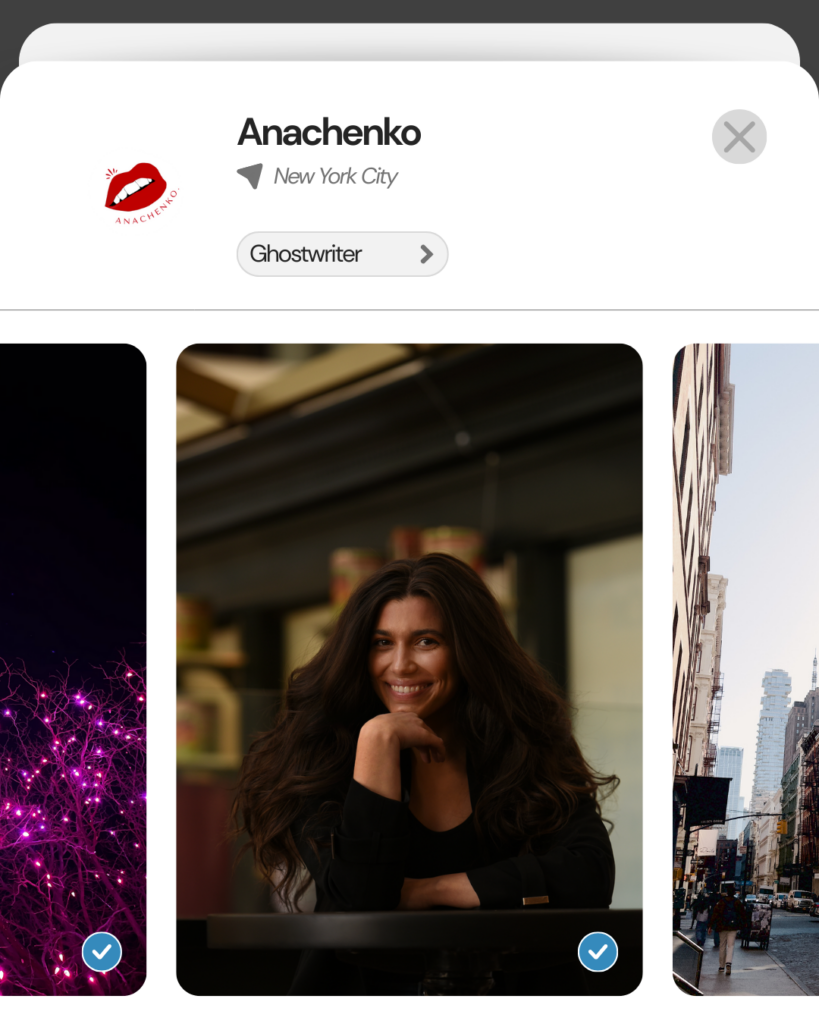
About the Author
I’m Anastasiya, a Premium Ghostwriter and your personal anthropologist.
Most people hear “ghostwriter” and think mysterious or secretive. But here’s what I actually do: I’m a business consultant who solves problems through writing. I build worlds with words.
Here’s the reality: only 10% of my work is the actual writing. The other 90%? I immerse myself in my clients’ worldview—their vision, mission, values, culture, expertise, and the way they naturally speak. I absorb their ideas, stories, and lived experiences, then translate their big ideas into content that connects with their dream audience.
My goal is simple: help founders and business owners be seen, heard, and understood. I capture the essence of who they are and what they stand for, then create content that positions them as the authority in their niche.
My three main services:
- Educational Email Courses (EECs)
- Newsletters + Email Sequences
- Social Ghostwriting (LinkedIn, articles, thought leadership)
I work with future builders—founders who dream big and want to make a positive impact on the world. If you’ve got a vision that deserves to be seen and need help building your brand foundation, I’d love to support you.
Because deserving organizations, businesses, and people should connect to the right audiences. Your mission and vision deserve to be seen by the world and supported—and that happens through the art of words.
Ready to stop hiding and start showing up? Visit anachenko.com or connect with me on LinkedIn.


