


I stared at the screen. My finger hovered over “send.”
This was my dream client. I had just finished building my portfolio, and I decided to shoot for the stars. I wrote them an email. Not an email that told them I was a great copywriter. An email that showed them.
I customized it. Formatted it. Made it smooth, easy to read, and impossible to stop reading until the end.
I held my breath and pressed send.
30 minutes later, their assistant emailed asking to set up a call. Within 24 hours, I was on Zoom with that dream client.
And the best part? They said they typically don’t enjoy reading long emails, but they couldn’t stop reading mine.
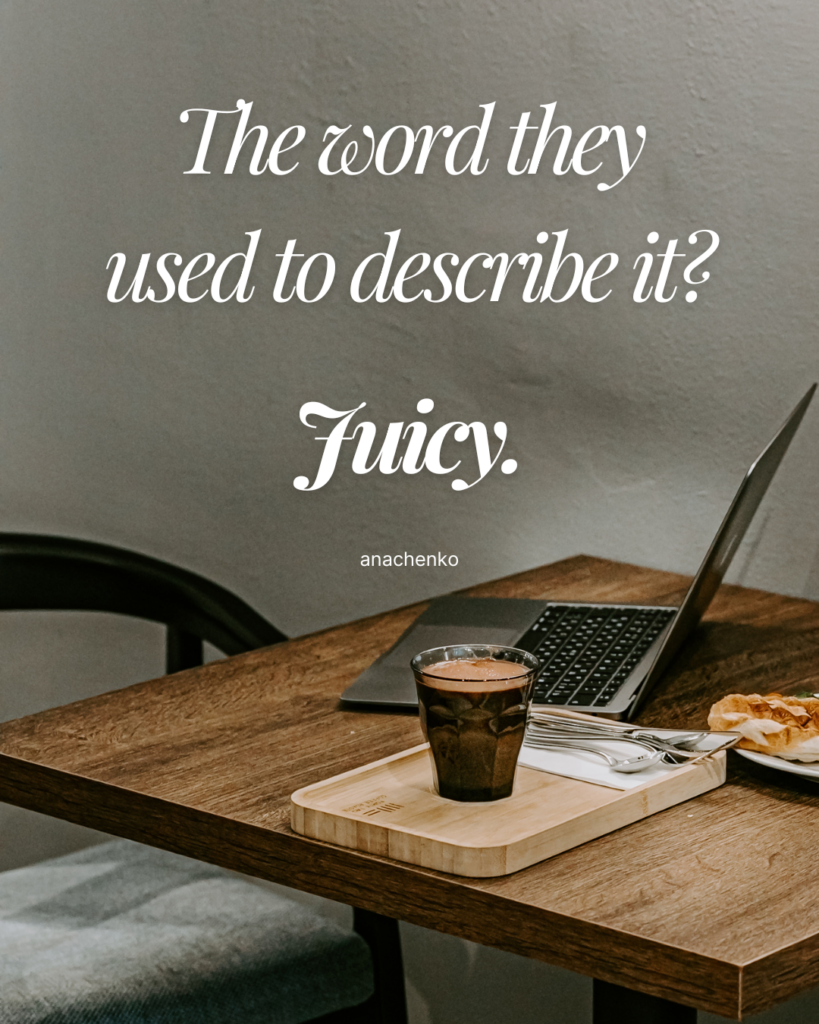
The word they used to describe it?
Juicy.
That’s when I realized something most business owners miss when writing to their customers.
Your customers don’t care that you say you’re trustworthy, experienced, or different. They care that you show them. And the way you show them? Through how you write.
Your email is the proof.
So, how do you make your emails to customers “juicy” and impossible to stop reading?
Here are the 4 elements that made that email work:
Element 1: Format the text for visual flow.
White space matters more than you think.
Dense paragraphs are exhausting to read. Break your ideas into 1-3 sentence chunks. Like this one.
Your reader’s eyes should glide down the page, not get stuck in a wall of text.
Before: “We’re excited to announce that our new service is now available and we think you’re going to love it because it’s been designed with your needs in mind and includes features that will help you save time, increase efficiency, and get better results than you’ve seen before.”
After: “We just launched something new.
It’s built specifically for people like you who need to save time without sacrificing results.
Want to see how it works?”
See the difference? The second version gives your reader room to breathe. Each sentence lands. Each idea gets space to sink in.
Actionable tips:
- Keep paragraphs to 3 lines max on mobile
- Use single-sentence paragraphs for emphasis
- Add line breaks before and after important points
- Break up long explanations with subheads
Element 2: Place questions intentionally.
Questions aren’t just engagement tricks.
They’re strategic pauses that pull your reader deeper into the conversation. But here’s the key: they need to feel natural, not forced.
Ask yourself: Would I actually ask this question in a real conversation? If not, cut it.
Bad question: “Are you ready to transform your business?”
(Too vague. Too salesy. Nobody actually talks like this.)
Good question: “What if you could cut your follow-up time in half?”
(Specific. Relatable. Sparks curiosity about how.)
Use questions to:
- Transition between ideas: “So what does this mean for you?”
- Address objections: “Worried this won’t work for your industry?”
- Create anticipation: “Want to know the easiest way to start?”
The best questions make your reader nod and think, “Yes, that’s exactly what I’m wondering.”
Element 3: Write like you’re having an interesting conversation.
Not a presentation. Not a pitch. A conversation.
Would you say “We prioritize customer satisfaction” in a real conversation? Or would you say, “We make sure you’re taken care of”?
Drop the corporate speak. Write like a human talking to another human.
Corporate speak vs. Human speak:
❌ “We leverage cutting-edge solutions to optimize your workflow.”
✅ “We help you get more done in less time.”
❌ “Our comprehensive suite of services facilitates seamless integration.”
✅ “Everything works together so you don’t have to think about it.”
❌ “We are committed to delivering exceptional value.”
✅ “We want you to feel like this was the best decision you made all week.”
Here’s the test: Read your email out loud. If you stumble over a sentence or wouldn’t say it to someone’s face, rewrite it.
Use contractions. Start sentences with “And” or “But” if it feels right. Write the way real people talk.
Element 4: Keep your reader’s interest in mind, not yours.
This is the biggest shift.
Most business owners write emails thinking, “What do I want to say?”
Winners write emails thinking: “What do they need to hear?”
It’s not about you. It’s about them. Their problems. Their questions. Their hesitations.
Instead of: “We’re thrilled to announce our 10-year anniversary and want to thank our loyal customers.”
Write: “You’ve been with us for years. Here’s a gift to say thank you.”
Instead of: “I wanted to reach out to see if you’d be interested in learning more about our new offering.”
Write: “You mentioned you were struggling with [specific problem]. I think I found something that’ll help.”
This principle applies to every customer touchpoint—from sales emails to follow-ups after appointments. Every sentence should answer the silent question your reader is asking: “Why does this matter to me?”
Quick audit for your next email:
- Count how many times you say “I,” “we,” or “our.”
- Count how many times you say “you” or “your.”
- If the first number is bigger, rewrite until it flips
Next time you write an email to your customers, ask yourself:
Am I telling them I’m great, or am I showing them?
Because when you show them through how you write, you won’t need to convince them of anything.
They’ll already know.
The Truth About “Juicy” Emails
Here’s what that dream client taught me: your writing is never just about words on a screen.
It’s about respect. Respect for your reader’s time, their intelligence, their inbox.
When you format for visual flow, you’re saying, “I made this easy for you.” When you ask intentional questions, you’re saying, “I’m thinking about what you need.” When you write conversationally, you’re saying, “I’m a real person who gets it.” And when you keep their interest first, you’re saying, “This is for you, not me.”
That’s what makes an email juicy.
Not tricks. Not hacks. Just genuine care for the person on the other end.
And when someone feels that? They don’t just read to the end. They respond. They book calls. They become customers.
All because you showed up as a human, not a brand.
Anastasiya
If you’re a business owner who wants to connect with your audience through words that feel natural, engaging, and impossible to ignore, let’s talk.
P.S. If you want me to read one of your customer emails and tell you exactly what to fix to make it juicier, send it my way. I love doing this.
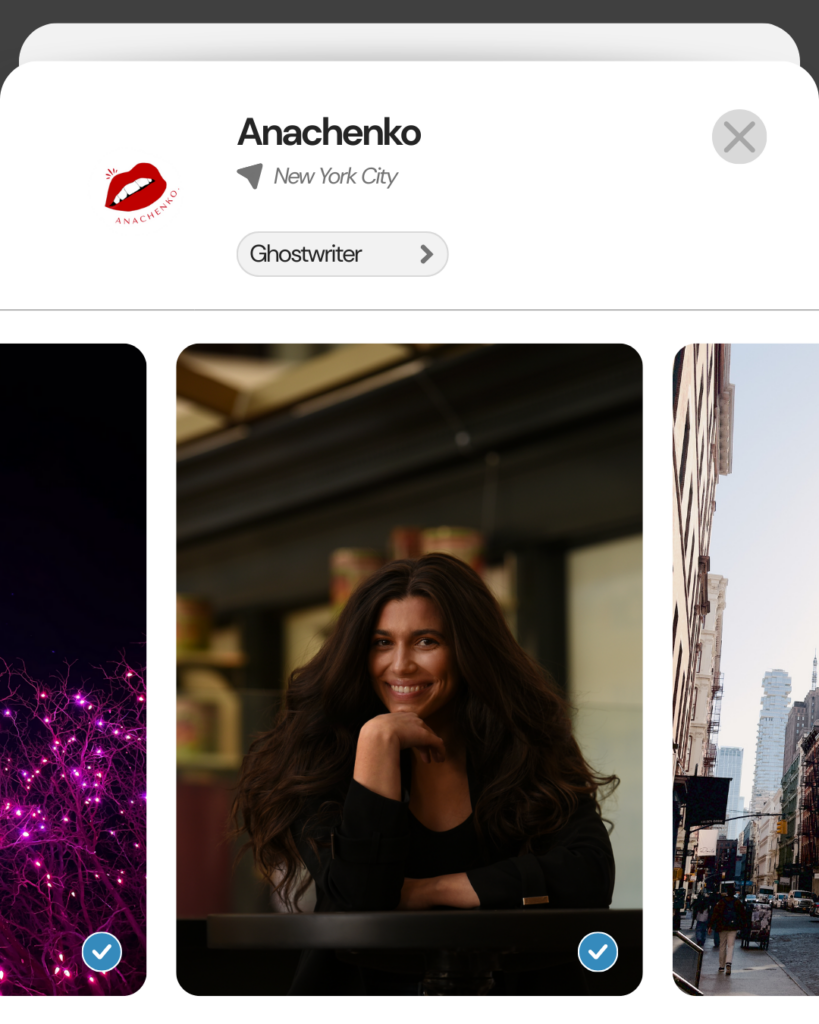
Anastasiya Tkachenko is the creator of anachenko, a copywriting and ghostwriting studio dedicated to helping visionary leaders, innovators, and future builders turn big ideas into stories that spark movements. After nearly a decade working in the nonprofit sector, she opened her studio to pursue her childhood dream of becoming a professional writer.
Today, she’s on a mission to help creatives, entrepreneurs, and business owners build their brand Universe—crafting messaging that doesn’t just get attention, but creates magnetic connections with dream clients. She believes every business has a story worth telling, and that the right words can transform invisible brands into unforgettable ones.
Through her work in ghostwriting, Anastasiya helps founders translate their vision, mission, and values into words that work—building worlds with words so her clients can build real worlds.


